
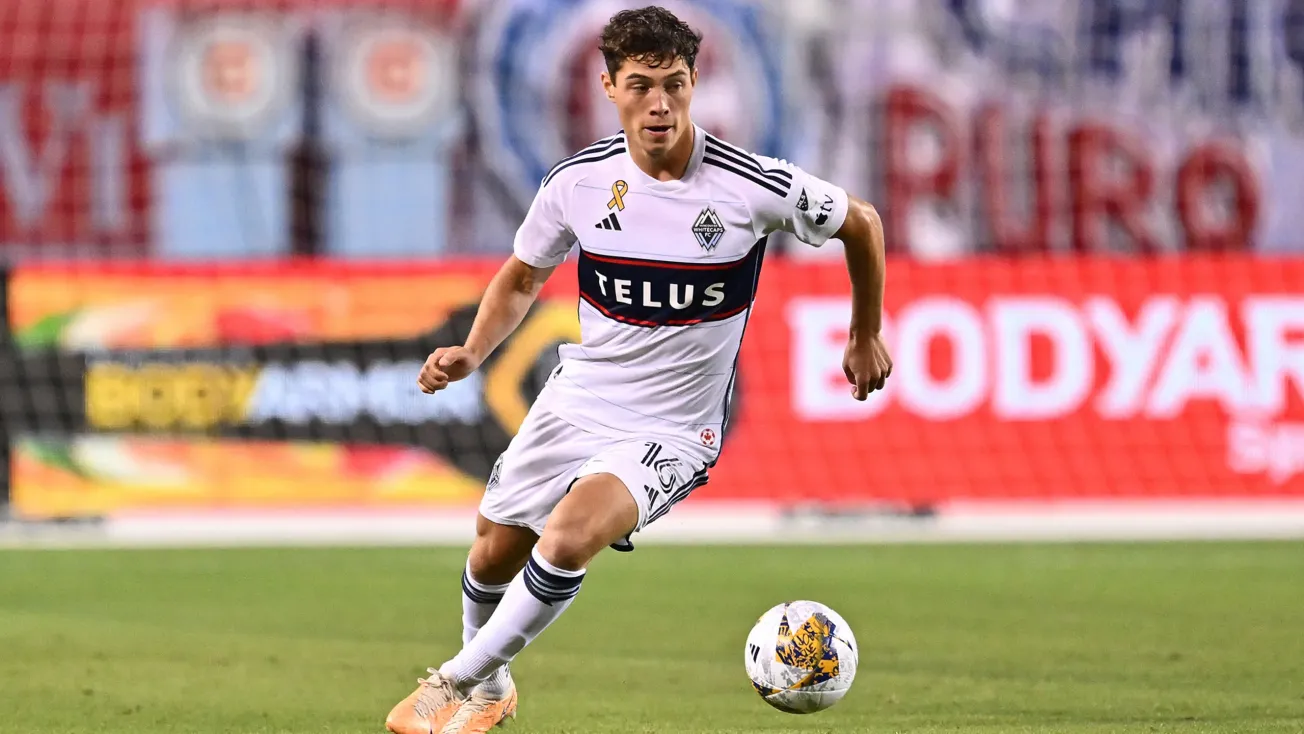
In recent seasons, Vancouver Whitecaps FC have been undergoing a quiet but significant roster rebuild. While the club remains competitive in Major League Soccer, a deeper look at the squad construction since 2023 reveals a clear pattern: the Whitecaps have lost several established contributors and replaced many of them with young prospects or players still trying to establish themselves at the MLS level. This strategy aligns with a growing trend across the league, where teams seek a balance between competitiveness and player development, but it also helps explain the inconsistency that has occasionally marked Vancouver’s performances.
The Whitecaps still rely on a strong spine to remain competitive. Goalkeeper Yohei Takaoka continues to be one of the most reliable players in the squad, while defender Tristan Blackmon provides stability at the back. In midfield, Sebastian Berhalter has emerged as a key engine in the team’s system, and striker Brian White remains the main attacking reference. Adding to that core is German veteran Thomas Müller, widely regarded as the biggest signing in the club’s history and a player expected to bring leadership and experience to a roster that has become increasingly young.
However, the biggest impact of the past few seasons can be seen in the team’s depth. Since 2023, the Whitecaps have lost several players who once offered balance and proven production. Among them was forward Fafà Picault, an important attacking option who provided speed and versatility. Creative midfielder Pedro Vite also departed, leaving behind a gap in creativity that has not been fully replaced. Scottish international Stuart Armstrong brought valuable European experience during his time with the club, even if his stay was relatively short. The team also lost Canadian international fullback Richie Laryea, whose attacking runs and energy on the flank added an extra dimension to the squad.
Other departures further reduced the team’s depth. Veteran winger Junior Hoilett contributed leadership and international experience during his spell with the club, while midfielder Julian Gressel — who later produced a season with more than ten assists for Inter Miami CF — represented the type of creative playmaker that remains rare in MLS rosters. Vancouver also lost versatile midfielder Ali Ahmed, considered an important tactical piece, and promising winger Jayden Nelson, a young player widely viewed as one of the club’s most exciting talents.
In response, the Whitecaps chose a recruitment strategy focused largely on potential rather than immediate impact. One of the most intriguing additions has been Peruvian prospect Kenji Cabrera, who has already shown flashes of technical quality and attacking creativity. Colombian fullback Edier Ocampo also quickly demonstrated he could compete physically and tactically at the MLS level. Not every move worked, however. Australian defender Giuseppe Bovalinastruggled to secure a place in the squad and eventually moved on, while striker Daniel Ríos had a relatively modest spell before leaving the club.
Several other players are still trying to establish themselves within the team. Senegalese forward Cheikh Sabaly arrived after scoring 15 goals in France’s second division and carries the expectation of becoming an offensive threat in MLS. Young American midfielder Aziel Jackson has shown flashes of creativity and already scored goals this season, though consistency remains a challenge. Midfielder Oliver Larraz is another player who still needs more minutes to demonstrate his full potential at this level. Meanwhile, Ecuadorian prospect Bruno Caicedo remains something of an unknown quantity after arriving with promise but not yet making his debut.
The club’s youth movement also extends to the academy pipeline. Players such as Jeevan Badwal and Mehdi Elloumihave begun to receive opportunities with the first team, highlighting the organization’s long-term emphasis on development. Both players are regarded as promising talents, but they are still at an early stage of their careers and require time and experience before becoming consistent contributors.
Injuries have also complicated Vancouver’s squad management. Canadian fullback Sam Adekugbe arrived with expectations of leadership and stability but has spent extended periods sidelined. The team has also had to cope with injuries affecting its main creative force, Ryan Gauld, whose absence exposes just how dependent the Whitecaps remain on a small group of key players.
Despite these challenges, head coach Jesper Sørensen has succeeded in reshaping the team’s identity. The Danish manager introduced a more organized tactical structure and a modern, high-intensity playing style. Yet even with those improvements, it is clear that the current roster offers less depth than the squad Vancouver possessed a few years ago.
Taken together, the period between 2023 and 2026 reveals a clear trend in the Vancouver Whitecaps’ roster strategy. The club lost several established players who delivered immediate results and chose to replace them largely with developmental prospects. Some of those moves could pay off in the long term, particularly if the younger players continue to evolve.
For now, however, the Whitecaps remain heavily dependent on their core group to compete at a high level in Major League Soccer. If the club’s young signings develop into consistent contributors, Vancouver could be building the foundation for a new competitive cycle. If they do not, the rebuilding process may take longer than supporters initially expected.